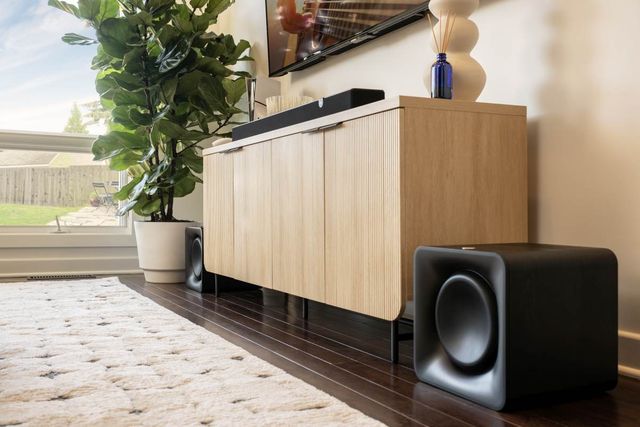
The dialogue in the movie comes through crisp and clear, but when the explosion hits or the spaceship rumbles overhead, the impact just is not there. The scene that should shake the couch falls flat, leaving the whole home theater feeling smaller than it should. That missing low-end is the difference between watching a movie and feeling it, and it is exactly what a quality subwoofer delivers. A Klipsch subwoofer is engineered to bring that impact with tight, controlled bass that blends smoothly with the rest of your system.
Hear Klipsch Subwoofers in Person at Flanner's
Feel the bass difference in our showroom and get expert calibration and installation. Our local team helps you match the right Klipsch subwoofer to your room.
Explore Klipsch SubwooferAt Flanner's Home Entertainment, we help homeowners choose and set up the right subwoofer to complete their sound. This guide covers what makes Klipsch subwoofers distinct, how to size one for your room, the difference between sealed and ported designs, and the power and placement tips that open up great bass. By the end, you will know exactly what to look for before buying a Klipsch subwoofer.
Key Takeaways
- Tight, efficient bass: A Klipsch subwoofer emphasizes speed, clarity, and clean output that blends with your speakers rather than chasing raw rumble.
- Size to your room: Match driver size to room square footage and your main speakers, using larger drivers for open floor plans.
- Sealed vs ported: Sealed designs give accurate bass for music and apartments, while ported designs hit harder for home theater.
- Setup matters: Power, placement near walls or corners, and the right crossover setting make or break performance.
What Makes Klipsch Subwoofers Different From Other Brands
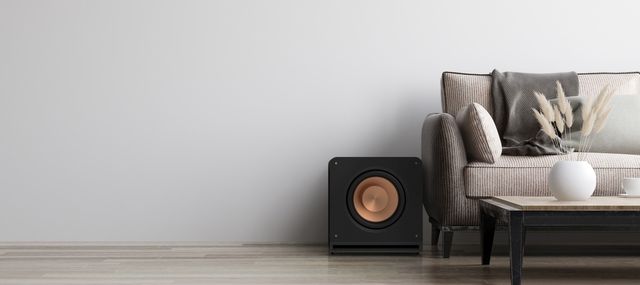
Klipsch has a distinct design philosophy rooted in horn-loaded technology, the approach the brand has been known for since its founding. That heritage shows up in a focus on efficiency, maximizing output while using power effectively, so a Klipsch subwoofer delivers strong, impactful bass without wasting energy.
The brand's tuning priorities set it apart from competitors. Rather than chasing the most extreme low-end extension at all costs, Klipsch emphasizes speed, clarity, and smooth blending with your satellite and main speakers. The result is tight, controlled bass that keeps pace with fast action and integrates smoothly into the overall sound, so the subwoofer feels like part of the system rather than a separate rumble box.
Klipsch organizes its home subwoofers into recognizable product families, including the Reference series and the higher-end Reference Premiere series, along with professional and architectural options for custom installations.
Here is the expectation-setting that helps you buy wisely: Klipsch's tuning delivers tight, musical, controlled bass, which differs from brands that prioritize sheer rumble and maximum low-end at the expense of accuracy. If you want bass that is fast, clean, and blends beautifully with dialogue and music, Klipsch's approach is a strength. If your only goal is the loudest possible floor-shaking rumble regardless of precision, you will want to weigh that against Klipsch's more controlled character. Understanding this philosophy up front makes sure a Klipsch subwoofer meets your expectations, and it shapes how you size and set one up, which we cover next.
How to Choose the Right Subwoofer Size for Your Room
Getting the size right is the single most important decision when buying a Klipsch subwoofer, and it comes down to two main factors: the size of your room and the size of the main speakers you already own. A subwoofer that is too small will strain in a large room, while an oversized one can overwhelm a small space.
General sizing guidance is straightforward:
- 8 or 10-inch subwoofers: Ideal for smaller rooms, apartments, and modest speaker setups where you want clean bass without overpowering the space.
- 12-inch or larger subwoofers: Better for open floor plans, larger rooms, and systems with bigger main speakers that need matching low-end.
Room characteristics beyond square footage matter too. High ceilings and open-concept layouts create more air volume to fill, so they demand more size and power for consistent, even bass throughout the space. A subwoofer that sounds full in a closed room can feel thin in a large open area.
Here is a simple, actionable reference framework: for rooms under about 1,500 cubic feet, an 8 or 10-inch subwoofer usually suffices; for medium rooms, a single 12-inch is a strong choice; and for large open spaces, a 12-inch or larger, or even dual subwoofers, delivers even coverage. Also match the subwoofer to your main speakers, since large floor-standing speakers pair best with a larger subwoofer for balance. Translating vague sizing advice into these concrete guidelines helps you choose a Klipsch subwoofer that fills your specific room properly, and the enclosure type, covered next, refines the choice further.
Sealed vs Ported Klipsch Subwoofers: Which Should You Choose
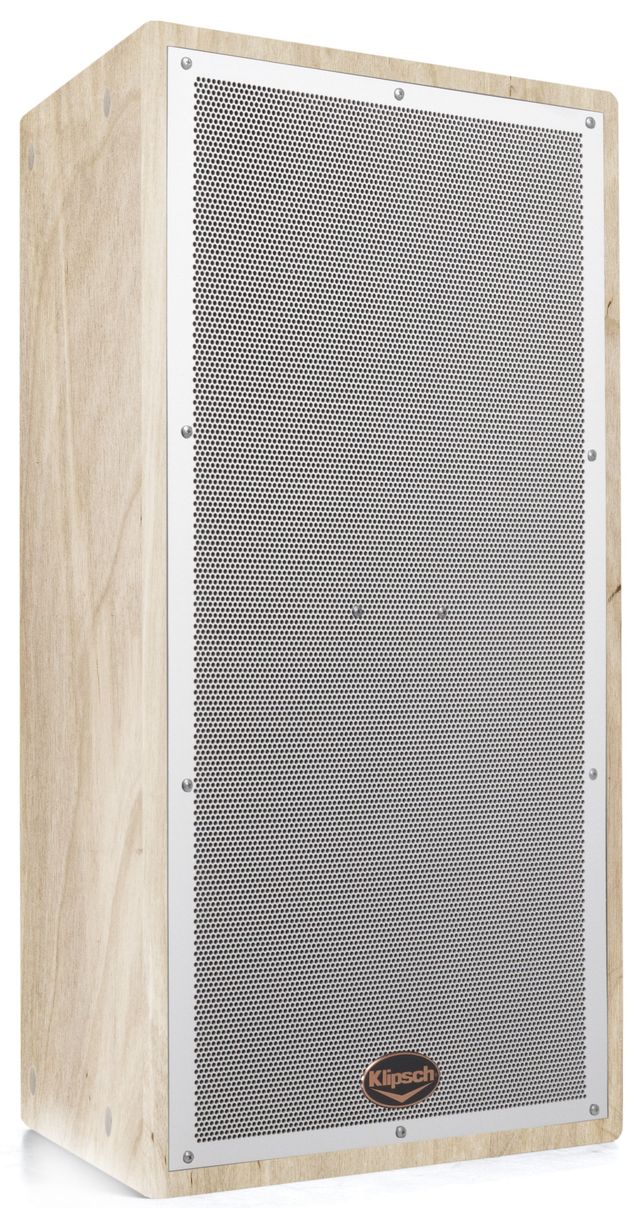
Beyond size, the enclosure design shapes how a Klipsch subwoofer sounds, and understanding sealed versus ported helps you match the right one to your needs. The two designs handle bass differently.
- Sealed enclosures: A fully closed cabinet produces tighter, more accurate, controlled bass. The trade-off is slightly less maximum output, but the precision is excellent for detailed listening.
- Ported enclosures: A cabinet with a tuned port or vent produces louder output and enhanced low-frequency extension, typically boosting the deep 20 to 60 Hz range that you feel in your chest during movies.
Use-case guidance makes the choice clear. Sealed designs often suit music listening and apartment or shared-wall living, where accuracy matters and you want controlled bass that does not overwhelm neighbors. Ported designs suit dedicated home theaters where maximum impact and floor-shaking effects are the goal. Klipsch offers ported models like the R-120SW and R-121SW that deliver that theater-grade punch.
Tying enclosure type to your lifestyle is what most spec sheets miss. If you live in an apartment with shared walls, a sealed or carefully controlled subwoofer keeps the bass tight and considerate of neighbors while still sounding great for music and movies. If you have a standalone home theater room where you can let the bass loose, a ported model rewards you with the biggest, most cinematic low-end. Thinking about where and how you will use the Klipsch subwoofer, not just the specs, points you to the right enclosure, and the comparison table below lets you cross-reference size, design, and use case at a glance.
Power, Placement, and Setup Tips for Klipsch Subwoofers
Once you have chosen a Klipsch subwoofer, setup is what opens up its full potential, and a few fundamentals make a dramatic difference. Start with power. Built-in amplifiers range from roughly 150 watts to over 400 watts, and higher continuous power helps the subwoofer maintain control during dynamic, demanding movie scenes without distorting. More power means cleaner bass when the action peaks.
Placement is the free upgrade most people overlook. Bass output increases when a subwoofer is near walls, and even more so in corners, because the surfaces reinforce the low frequencies. You can use this to your advantage, moving the subwoofer closer to a corner for more output or pulling it into the room for tighter, more even bass.
Crossover setting ties the subwoofer to your main speakers. The crossover point determines where the subwoofer takes over the low frequencies, and a good starting rule is to set it about 10 Hz above the lowest frequency your main speakers can produce, so the two blend smoothly with no gap or overlap.
Here is a simple step-by-step setup sequence for great results:
- Test placement: Start with the subwoofer near a wall or corner, play bass-heavy content, and move it until the bass sounds full and even where you sit.
- Set the crossover: Set the crossover point about 10 Hz above your main speakers' lowest range for a smooth handoff.
- Match levels: Adjust the subwoofer volume so the bass blends naturally with the speakers rather than dominating or disappearing.
Following this process rather than guessing gives you controlled, impactful bass that integrates beautifully. Our team can also professionally calibrate your Klipsch subwoofer for your specific room, dialing in placement, crossover, and levels precisely.
Wireless and Connectivity Options for Klipsch Subwoofers
Beyond size and enclosure, how a Klipsch subwoofer connects to your system affects both placement flexibility and ease of setup, so it is worth understanding your connectivity options before you buy. The right connection approach can make installation cleaner and give you more freedom in where the subwoofer sits.
Here are the main connectivity considerations for a Klipsch subwoofer:
- Wired connection: The traditional approach uses an RCA or LFE cable from your receiver to the subwoofer, delivering a reliable, high-quality signal. It requires running a cable, which influences where you place the subwoofer.
- Wireless-enabled setups: Some Klipsch subwoofers support wireless connectivity through an optional or built-in wireless kit, letting you place the subwoofer anywhere with a power outlet without running a long cable across the room.
- Placement freedom: Wireless options are especially helpful in rooms where the ideal bass position is far from the receiver, or where running a cable would be unsightly or difficult.
- System compatibility: Confirm that the subwoofer's connection type matches your receiver or amplifier outputs, since a proper subwoofer or LFE output makes sure the best performance.
The trade-off is worth weighing. A wired connection is the gold standard for reliability and signal quality, ideal for a dedicated home theater where the subwoofer sits near the equipment. A wireless-enabled setup shines when placement flexibility matters most, such as in a living room where the best-sounding corner is across from the receiver.
For many homeowners, the ability to position the subwoofer where it sounds best, rather than where the cable reaches, is a genuine advantage. Since bass placement dramatically affects sound quality, wireless flexibility can help you achieve better results in a tricky room. Our team can advise on which Klipsch subwoofer connectivity option fits your setup and help you place and connect it for the cleanest, best-sounding result.
Read more:
- What Is a Powered Subwoofer & Do You Need One?
- 5 Mistakes to Avoid When Buying a Speaker Home Theater System
Klipsch Subwoofer Models Compared by Size, Power, and Design
Seeing Klipsch subwoofer categories side by side helps you match one to your room and use. The table below compares them on the factors that matter most.
| Category | Driver Size | Enclosure Type | Amplifier Power Range | Ideal Room Size | Ideal Use Case |
|---|---|---|---|---|---|
| Compact and architectural | 8 inch | Sealed or in-wall | Around 150 to 300 watts | Small rooms, apartments | Music, shared-wall living |
| Mid-size reference | 10 to 12 inch | Ported | Around 300 to 400 watts | Medium rooms | Movies and music |
| Large home theater | 12 inch or larger | Ported | 400-plus watts | Large, open rooms | Dedicated home theater |
| Custom in-wall/ceiling | 8 to 10 inch | Architectural | Varies by amplifier | Any, discreet installs | Clean, hidden setups |
Klipsch Subwoofer Advantages and Disadvantages
Choosing a Klipsch subwoofer over competing brands brings clear strengths along with a couple of trade-offs. Here is the balanced view before you decide.
Pros
Efficient horn-loaded design
Klipsch's heritage technology delivers strong output while using power effectively.
Tight, controlled bass
The tuning emphasizes speed and clarity that blend smoothly with your speakers.
Strong performance-to-power ratio
Klipsch subwoofers produce impressive impact relative to their amplifier power.
Apartment-friendly options
Sealed and controlled models suit shared-wall living where accuracy matters.
Cons
Less extreme low-end
Klipsch prioritizes control over the maximum deep rumble some rival brands chase.
Premium pricing on top models
Higher-end Reference Premiere subwoofers carry a premium price.
Read more:
Featured Klipsch Subwoofers at Flanner's Home Entertainment
This is the only section where we recommend specific models. The Klipsch subwoofers below span surface-mount, in-wall, in-ceiling, and standalone designs, so you can match power and format to your room and installation. Our showroom team can demo the bass difference in person.
Klipsch 8" Black Surface Mount Subwoofer KL-PSM-800-SW-T

This Klipsch 8-inch surface-mount subwoofer is designed for discreet installations where a floor-standing sub will not fit. It mounts to a wall or surface and delivers tight, controlled bass in a compact black package, ideal for smaller rooms, custom setups, or spaces where floor space is limited. The surface-mount design keeps the room clean. For a homeowner who wants Klipsch bass quality in a space-saving, low-profile format that blends into the room, this subwoofer is a smart, versatile choice that adds impactful low-end without taking up floor space.
Top Features
- Driver size: 8-inch driver.
- Enclosure type: Surface-mount design.
- Amplifier power: Suited to smaller rooms.
- Ideal room size: Compact and custom spaces.
Klipsch 8" In-Wall Subwoofer RW-5802 II

This Klipsch 8-inch in-wall subwoofer disappears into the wall for a completely clean, clutter-free installation while still delivering satisfying bass. It is ideal for custom home theaters and living rooms that want low-end impact without a visible subwoofer box. The in-wall design preserves floor space and keeps the aesthetic minimal. For a design-focused homeowner who wants quality Klipsch bass integrated invisibly into a custom system, this in-wall subwoofer is an excellent choice that combines discreet installation with the controlled, musical bass Klipsch is known for.
Top Features
- Driver size: 8-inch driver.
- Enclosure type: In-wall architectural design.
- Amplifier power: Requires compatible amplifier.
- Ideal room size: Custom living rooms and theaters.
Klipsch Flexus 10" Ebony Vinyl Subwoofer Flexus SUB 100

This Klipsch Flexus 10-inch subwoofer is part of the Flexus system, designed to pair smoothly with Klipsch soundbars and speakers for an easy, powerful upgrade. The 10-inch driver adds deep, impactful bass to movies and music, and the ebony vinyl finish looks clean in any room. It is a great way to add serious low-end to a soundbar-based setup. For a homeowner who wants a simple, effective bass upgrade that integrates easily with a Flexus system, this Klipsch subwoofer delivers big improvement in low-end impact with straightforward setup.
Top Features
- Driver size: 10-inch driver.
- Enclosure type: Standalone Flexus subwoofer.
- Amplifier power: Built-in amplification.
- Ideal room size: Medium rooms and soundbar systems.
Klipsch PIC Series 8" In-Ceiling Subwoofer PIC-800-SW-T
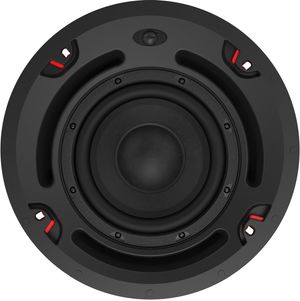
This Klipsch PIC Series 8-inch in-ceiling subwoofer brings bass to whole-home and multi-room audio systems from above, mounting flush into the ceiling. It is ideal for adding low-end to ceiling speaker setups where a traditional subwoofer would not fit, keeping the installation completely discreet. The in-ceiling design preserves all floor and wall space. For a homeowner building a whole-home audio system who wants added bass integrated invisibly into the ceiling, this Klipsch subwoofer is a smart architectural choice that rounds out multi-room sound with satisfying low-end.
Top Features
- Driver size: 8-inch driver.
- Enclosure type: In-ceiling architectural design.
- Amplifier power: Requires compatible amplifier.
- Ideal room size: Multi-room and whole-home audio.
Klipsch Professional Series PRO-800SW Black Polymer Veneer 8" In-Ceiling Bandpass Subwoofer

This Klipsch Professional Series in-ceiling bandpass subwoofer is engineered for high-performance custom installations, using a bandpass design to maximize bass output from an in-ceiling format. The 8-inch driver delivers strong, controlled low-end while staying completely hidden in the ceiling. It suits serious custom home theater and whole-home systems that demand quality bass without visible equipment. For a homeowner investing in a professional-grade discreet audio system, this Klipsch subwoofer is a top-tier architectural choice that combines powerful performance with an invisible installation.
Top Features
- Driver size: 8-inch bandpass driver.
- Enclosure type: In-ceiling bandpass design.
- Amplifier power: Professional-grade performance.
- Ideal room size: Custom theaters and whole-home systems.
Klipsch Professional Series PRO-1000SW 10" In-Wall Subwoofer

This Klipsch Professional Series 10-inch in-wall subwoofer delivers powerful, impactful bass for premium custom installations while disappearing into the wall. The larger 10-inch driver produces deeper, more forceful low-end than compact models, making it ideal for larger custom home theaters that want serious bass without a visible box. The professional-grade build makes sure reliable, high performance. For a homeowner building a high-end custom theater who wants maximum discreet bass impact, this Klipsch subwoofer is an outstanding choice that combines powerful, controlled low-end with a completely hidden, architectural installation.
Top Features
- Driver size: 10-inch driver.
- Enclosure type: In-wall architectural design.
- Amplifier power: Professional-grade performance.
- Ideal room size: Larger custom home theaters.
Find the Right Klipsch Subwoofer for Your Home Theater
Choosing a Klipsch subwoofer comes down to sizing it to your room and main speakers, picking the sealed or ported design that fits your listening and living situation, and setting it up with the right power, placement, and crossover. Get those right and you get the tight, impactful bass that makes every movie scene and music track come alive.
The best way to appreciate the difference is to hear it, so visit Flanner's Home Entertainment. As an independent local retailer, we offer showroom demos to hear the bass in person, professional calibration and installation, and responsive local customer service that big-box competitors cannot match. Stop by or reach out today and feel every scene with the perfect Klipsch subwoofer.
Read more:
- Powered Bookshelf Speakers for Music Lovers & Home Studios
- Sony vs Samsung TVs: Which Is Better?
- Best Brands for OLED 65-Inch TVs
Frequently Asked Questions about Klipsch Subwoofers
For smaller rooms and apartments, an 8 or 10-inch Klipsch subwoofer works well, while open floor plans and larger rooms benefit from a 12-inch or larger. Match the subwoofer size to both your room and your main speakers.
Sealed Klipsch subwoofers produce tighter, more accurate bass ideal for music and apartments, while ported models deliver louder output and deeper extension for home theater impact. Your listening style and living situation should guide the choice.
For home theater use, a Klipsch subwoofer with a higher continuous power amplifier, often in the 300 to over 400 watt range, helps maintain control during dynamic scenes. More power delivers cleaner bass at demanding peaks.
Place a Klipsch subwoofer near a wall or in a corner to increase bass output, then fine-tune by moving it until the bass sounds even where you sit. Corner placement boosts output the most.
Set the crossover point about 10 Hz above the lowest frequency your main speakers can produce, so the subwoofer and speakers blend smoothly. This avoids gaps or overlap in the bass for a smooth handoff.
Yes, Klipsch subwoofers are good for apartments, especially sealed or controlled models that produce tight, accurate bass. Their controlled tuning helps you enjoy impactful low-end while being more considerate of neighbors than boomy alternatives.
Why Trust Flanners Home Entertainment?
When you choose Flanner’s Home Entertainment, you're trusting a deeply rooted, family-owned legacy that dates back to 1891 a company that has evolved from a piano and sheet-music shop into a premier specialty retailer of high-end audio, video, and smart-home systems. With showrooms in West Allis and Northshore Grafton, Flanner’s combines decades of expertise and personalized service. Its team includes members with 15–30 years of industry experience to design and install tailored home theater, multi-room audio, networking, and control solutions. Over its more than 130-year history, the business has maintained its commitment to craftsmanship, reliability, and genuine customer relationships, making every system feel as thoughtfully built as the business itself.