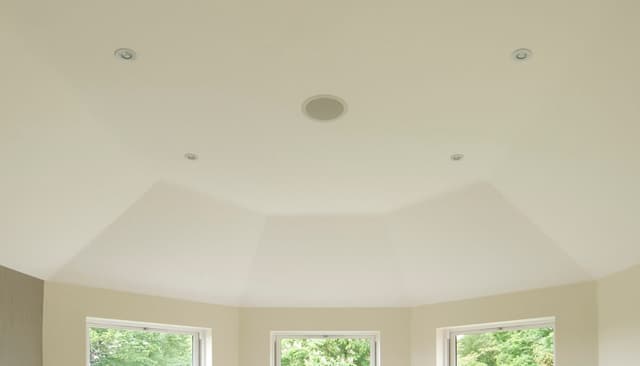
The party is in full swing, but the music only lives in the living room. Step into the kitchen to refill a drink and the sound drops to a muffle; head out to the patio and it disappears entirely, leaving guests to shout over silence. Meanwhile, the bulky speaker towers that used to fill a room now feel like clutter in a freshly designed space. Ceiling speakers solve both problems at once, delivering rich, even sound throughout the home while disappearing into the architecture.
Design Your Whole-Home Audio at Flanner's Home Entertainment
Get expert system design and professional installation for ceiling speakers throughout your home. Hear the difference in our showroom before you buy.
At Flanner's Home Entertainment, we design whole-home audio systems that follow you from room to room without a single tower in sight. This guide covers why ceiling speakers are ideal for whole-home sound, the best rooms and placement strategies, the specifications that actually affect quality, and how to tie everything into a multi-room system. By the end, you will know how to build a smooth sound experience for every room in your house.
Key Takeaways
- Sound without clutter: Ceiling speakers deliver room-filling audio while freeing floor and shelf space and disappearing into the ceiling.
- Placement drives quality: Even spacing, distance from walls, and room-appropriate models matter as much as the speaker itself.
- Specs tie to rooms: Woofer size, power handling, and moisture resistance should match each room's size and conditions.
- Built for multi-room: Ceiling speakers integrate with zone-based systems for smooth sound as you move through the home.
Why Ceiling Speakers Are Ideal for Whole-Home Audio
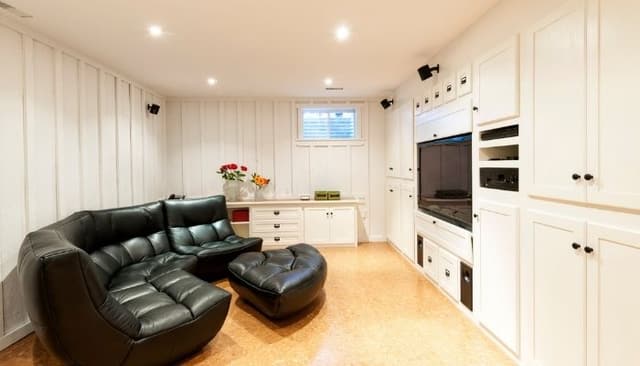
Ceiling speakers have become the go-to choice for whole-home audio for one simple reason: they deliver excellent sound without taking up any visible space. Mounted flush into the ceiling, they free up floor and shelf space entirely while producing audio that rivals freestanding speakers. Your rooms stay clean and uncluttered, and the sound comes from above like it is part of the house itself.
The bigger advantage is consistency across rooms. A well-designed ceiling speaker system supports smooth sound flow from space to space, so as you walk from the living room to the kitchen to the hallway, the volume and clarity stay even. There are no abrupt drop-offs or spots where the music suddenly gets louder, which is exactly the smooth experience whole-home audio promises.
The category spans a wide range of quality, and this is where many buyers get tripped up. Respected names in architectural speakers include Bowers & Wilkins, Sonance, Polk, KEF, Klipsch, Episode, Paradigm, Yamaha, Bose, and Sonos, and they cover everything from basic to reference-grade.
Here is a distinction most content skips: contractor-grade and premium in-ceiling speakers are not interchangeable. Contractor-grade speakers are affordable and fine for background music in a bathroom or hallway, while premium models deliver the detail, clarity, and bass that make a living room or home theater truly impressive. Price and performance vary widely, so matching the tier to how you will use each room is the key to satisfaction. Understanding that range up front helps you invest wisely as you plan placement, which we turn to next.
Best Rooms and Placement Ideas for Ceiling Speakers
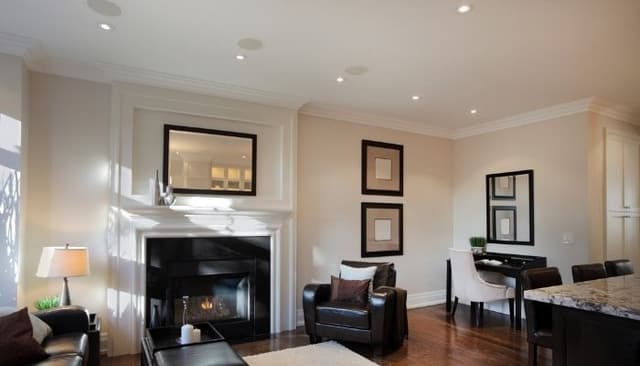
Ceiling speakers work almost anywhere, and thinking room by room helps you plan a system that sounds great everywhere. The ideal zones for ceiling speakers include:
- Living rooms: For music and to support a home theater with immersive overhead or surround sound.
- Kitchens: So cooking and gathering come with a soundtrack, filling the busiest room in the house.
- Bathrooms: For relaxing background audio during a shower or bath, using moisture-resistant models.
- Bedrooms and home offices: For gentle background music or focused listening without clutter.
- Covered patios: For outdoor entertaining, using weather-rated speakers built to handle the elements.
- Hallways: To carry sound between rooms and keep the whole-home experience smooth.
Placement fundamentals make a real difference in how these sound. Aim for even coverage patterns by spacing speakers uniformly across the ceiling, keep them a reasonable distance from walls to avoid reflections, and remember that ceiling height affects how sound disperses, with higher ceilings needing careful placement for even coverage.
Special-use spaces deserve extra attention. Bathrooms and covered outdoor areas expose speakers to humidity and temperature swings, so they require moisture-resistant or weather-rated models built for those conditions. Installing a standard speaker in a steamy bathroom shortens its life considerably.
Here is a practical approach most competitor content overlooks: prioritize rooms for a phased install. Most homeowners will not wire every room at once, so start with the spaces you use most, like the living room and kitchen, then add bedrooms, bathrooms, and the patio in later phases. Planning the full system but rolling it out in stages spreads the cost and lets you expand your ceiling speakers over time without redoing work.
Key Specifications to Consider When Choosing Ceiling Speakers
The specs on a ceiling speaker box can look intimidating, but a few key numbers determine how good it sounds, and translating them into plain terms makes choosing easy. Start with woofer size, which ranges from about 5.25 inches up to 10 inches or larger. The woofer drives bass and volume, so bigger woofers suit larger rooms and deliver fuller low end, while smaller woofers work fine for background sound in compact spaces.
A few other specs matter for compatibility and quality:
- Power handling and wattage: This indicates how much power a speaker can take. Match it to your amplifier or receiver so the speaker is neither underpowered nor overdriven.
- Impedance: Measured in ohms, impedance affects how the speaker pairs with your amplifier. Most home systems use 8-ohm speakers, and your receiver needs to support the total load.
- Build quality features: Pivoting tweeters aim high frequencies toward your listening position, moisture-resistant materials protect speakers in humid areas, and paintable grilles and finishes let the speaker blend into the ceiling.
Translating these into buying guidance is straightforward when you tie them to the room. A large open-concept living room benefits from 8-inch or larger woofers with higher power handling for full, room-filling sound. A bathroom or bedroom does well with a 5.25- or 6.5-inch moisture-resistant speaker for pleasant background audio. A home theater room rewards premium speakers with pivoting tweeters aimed at the seating.
Rather than chasing the biggest numbers, match the specs to each room's size and purpose. That approach makes sure your ceiling speakers sound their best where it matters, and the comparison table below makes cross-referencing size, power, and use case simple.
Connecting Ceiling Speakers to a Multi-Room Audio System
Ceiling speakers reach their full potential when tied into a multi-room audio system, which is what turns individual speakers into a true whole-home experience. These systems let you control audio by zone, playing different music in different rooms or the same track everywhere, all managed from an app, a wall control, or your voice.
The heart of the setup is a receiver or multi-zone amplifier that powers the speakers and manages the zones. Ceiling speakers connect to this hub, and in-wall or in-ceiling volume controls let you adjust each room independently. Modern platforms add smart home integration, voice assistant compatibility, and streaming platform support, so your favorite services play smoothly throughout the house.
You will also choose between wired and wireless-enabled approaches. A wired system connecting speakers to a central amplifier delivers the most reliable, highest-quality result, while wireless-enabled platforms offer flexibility and easier expansion. Many whole-home designs combine both, using wired ceiling speakers with wireless streaming to the amplifier.
Here is the planning distinction that saves headaches: wiring during a remodel or new build is far easier than retrofitting an existing home. If you are renovating or building, run speaker wire to every room you might ever want audio in, even rooms you will not outfit right away, because the walls are already open. Retrofitting a finished home is still very doable, but it requires fishing wire through existing walls and ceilings, which is more labor. Planning wiring at the right stage is one of the most valuable things you can do for a whole-home ceiling speakers system, and it is exactly the kind of guidance our design team provides.
Ceiling Speaker Installation: DIY vs Professional
Once you have chosen your ceiling speakers and planned the system, installation is the final piece, and deciding between doing it yourself and hiring a professional depends on your comfort with wiring and construction. Understanding what each path involves helps you get clean, reliable results without frustration or safety risks.
Here is what to weigh when choosing your installation approach:
- DIY installation: Feasible for a handy homeowner installing a single pair in an accessible ceiling, especially in new construction with open walls. It requires cutting precise holes, running speaker wire, and making solid electrical connections to the amplifier.
- Professional installation: The safer choice for whole-home systems, multiple rooms, or retrofitting a finished house. Professionals fish wire cleanly through existing walls, make sure proper hole placement for even coverage, and handle the connections to your receiver or multi-zone amplifier correctly.
- Retrofit complexity: Adding ceiling speakers to a finished home is more involved than new construction, since wire must be routed through insulation, joists, and existing drywall without damaging the ceiling.
- System calibration: Beyond mounting, a professional can calibrate the system, set volume zones, and tune the sound for balanced coverage across rooms.
The trade-off comes down to scope and confidence. A single-room background audio project may be within reach for a capable DIYer, but a coordinated whole-home system with multiple zones benefits enormously from professional wiring and calibration that guarantee clean, hidden cabling and even sound everywhere.
Getting installation right protects your investment and makes sure the smooth experience you are paying for. Poorly placed speakers or sloppy wiring undercut even premium equipment. Our team handles professional installation and system design so your ceiling speakers are positioned for optimal coverage, wired cleanly out of sight, and calibrated to sound their best in every room, giving you a polished result that DIY often cannot match.
Ceiling Speaker Options Compared by Size, Power, and Use Case
Seeing ceiling speaker categories side by side helps you match one to each room. The table below compares them on the factors that matter most.
| Category | Woofer Size Range | Ideal Room Type | Power Handling | Moisture Resistance | Price Tier |
|---|---|---|---|---|---|
| Compact background | 5.25 to 6.5 inch | Small rooms, hallways | Lower | Available for humid areas | Budget to mid |
| Full-range room audio | 6.5 to 8 inch | Living rooms, kitchens | Moderate to high | Standard | Mid to premium |
| Large open-concept | 8 to 10 inch or larger | Great rooms, home theater | High | Standard | Premium |
| Moisture and outdoor | 6.5 to 8 inch | Bathrooms, covered patios | Moderate | Weather-rated | Mid to premium |
Read more:
- 5 Mistakes to Avoid When Buying a Speaker Home Theater System
- Powered Bookshelf Speakers for Music Lovers & Home Studios
Choosing ceiling speakers over floor-standing or bookshelf speakers brings clear benefits along with a couple of trade-offs. Here is the balanced view before you plan your system.
Pros
Space savings
Ceiling speakers free up all floor and shelf space by mounting flush into the ceiling.
Whole-home sound flow
Even coverage across rooms creates a smooth audio experience as you move through the house.
Discreet aesthetics
Paintable grilles let speakers blend into the ceiling for a clean, clutter-free look.
Versatility across rooms
Moisture-rated models extend audio to bathrooms and covered patios, not just living spaces.
Cons
Installation complexity and cost
Proper wiring and placement often require professional installation, especially in finished homes.
Limited stereo imaging
Ceiling speakers offer less precise stereo imaging than dedicated floor-standing speakers for critical listening.
Read more:
Featured Ceiling Speakers at Flanner's Home Entertainment
This is the only section where we recommend specific models. The ceiling speakers below span compact background models to premium room audio, so you can match each to the right room. Our showroom team can help you design a coordinated whole-home system.
Bowers & Wilkins 3" In-Ceiling Speaker (Each) CCM632
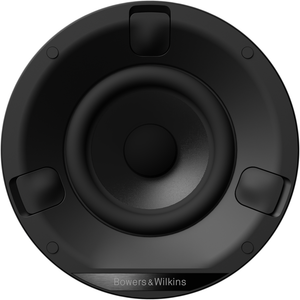
This compact Bowers & Wilkins in-ceiling speaker brings the brand's respected audio quality to small spaces and discreet installations. Its 3-inch driver delivers clear, pleasant sound ideal for hallways, bathrooms, and background music zones where a large speaker would be overkill. The small footprint blends almost invisibly into the ceiling. For a homeowner who wants premium-brand sound quality in a subtle, space-conscious package for background listening, this Bowers & Wilkins speaker is an excellent choice that proves great audio does not require a large speaker to disappear beautifully into the room.
Top Features
- Woofer size: Compact 3-inch driver.
- Power handling: Suited to background audio.
- Moisture resistance: Appropriate for varied indoor spaces.
- Ideal room type: Hallways, small rooms, background zones.
Bowers & Wilkins 6" 2-Way Dual Channel In-Ceiling Speaker (Each) CCM663SR
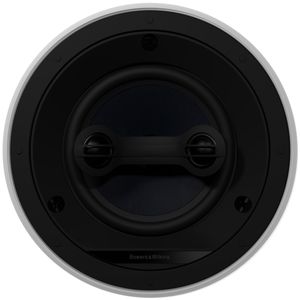
This Bowers & Wilkins dual-channel in-ceiling speaker is a clever solution for rooms where you want stereo sound from a single speaker, such as a hallway, bathroom, or small room served by one unit. The 6-inch 2-way design delivers full, balanced audio, and the dual-channel format plays both left and right channels through one speaker. For a space that cannot fit two speakers but still wants proper stereo sound, this Bowers & Wilkins model is an ideal, elegant answer that brings rich audio to single-speaker rooms without compromise.
Top Features
- Woofer size: 6-inch 2-way driver.
- Power handling: Moderate for room-filling audio.
- Moisture resistance: Suitable for many indoor rooms.
- Ideal room type: Single-speaker stereo rooms.
Bowers & Wilkins CCM73 White 4" 3-Way Premium In-Ceiling Loudspeaker (Each) CCM73 S2
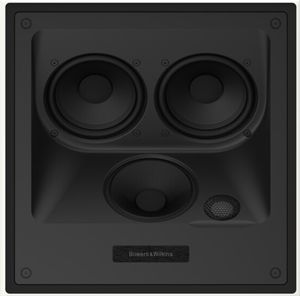
This premium Bowers & Wilkins 3-way in-ceiling loudspeaker delivers detailed, high-fidelity sound for listeners who care about audio quality. The 3-way design separates highs, mids, and lows for greater clarity and accuracy, making it well suited to serious music listening or a refined living room system. The clean white finish blends into the ceiling. For an audiophile or design-focused homeowner who wants reference-grade in-ceiling performance in a discreet package, this Bowers & Wilkins loudspeaker is an outstanding premium choice that brings exceptional detail to whole-home audio.
Top Features
- Woofer size: 4-inch 3-way driver system.
- Power handling: Premium performance range.
- Moisture resistance: Suitable for living spaces.
- Ideal room type: Critical listening and living rooms.
Bowers & Wilkins 8" 2-Way In-Ceiling System (Each) CCM684
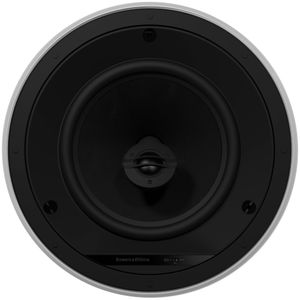
This Bowers & Wilkins 8-inch in-ceiling system is built for larger rooms that demand full, powerful sound. The big 8-inch woofer produces deep, room-filling bass and volume ideal for open-concept living areas, great rooms, and home theater support. The 2-way design keeps the sound clear and balanced at higher volumes. For a homeowner outfitting a spacious main living area or home theater who wants impressive, full-range in-ceiling audio, this Bowers & Wilkins system is an excellent high-performance choice that fills big spaces with rich, satisfying sound.
Top Features
- Woofer size: Large 8-inch woofer.
- Power handling: High for large rooms.
- Moisture resistance: Suitable for living spaces.
- Ideal room type: Open-concept and home theater.
Definitive Technology Dymension Ci Max Series 6.5" Black In-Ceiling Speaker DC-65 Max
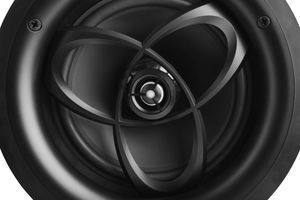
This Definitive Technology Dymension in-ceiling speaker delivers high-performance sound with a 6.5-inch driver and a sleek black finish for a bold, modern look. Known for detailed, dynamic audio, it suits living rooms, media spaces, and multi-room systems that want quality sound with a distinctive appearance. The black finish stands out or blends with darker ceilings. For a homeowner who wants strong performance and a striking design in a versatile 6.5-inch ceiling speaker, this Definitive Technology model is an excellent choice that pairs impressive sound with eye-catching style.
Top Features
- Woofer size: 6.5-inch driver.
- Power handling: Moderate to high performance.
- Moisture resistance: Suitable for indoor rooms.
- Ideal room type: Living rooms and media spaces.
Klipsch PIC Series 5.25" In-Ceiling Speaker PIC-525-T-SC
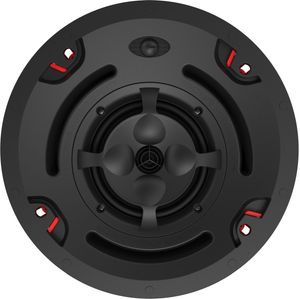
This Klipsch PIC Series in-ceiling speaker brings the brand's signature clear, efficient sound to a versatile 5.25-inch design. It is a great fit for background music and multi-room audio in medium and smaller spaces, delivering the lively, detailed sound Klipsch is known for. The compact size installs easily and blends into the ceiling. For a homeowner building a whole-home system who wants dependable Klipsch performance at an accessible size and price, this ceiling speaker is a smart, reliable choice that spreads quality sound throughout the house room by room.
Top Features
- Woofer size: 5.25-inch driver.
- Power handling: Suited to background and multi-room audio.
- Moisture resistance: Suitable for many indoor spaces.
- Ideal room type: Medium rooms and multi-room zones.
Design Your Whole-Home Sound System With the Right Ceiling Speakers
Building great whole-home audio comes down to smart placement across the rooms you use most, matching speaker specifications like woofer size and power to each space, and integrating everything into a multi-room system for smooth sound. Get those pieces right and music follows you effortlessly from the living room to the kitchen to the patio.
When you are ready to design your system, visit Flanner's Home Entertainment. As an independent local retailer, we offer expert showroom guidance and system design consultation, professional installation for clean and reliable wiring, and responsive local customer service that big-box competitors cannot match. Stop by or reach out today and bring every room in your home to life with the perfect ceiling speakers.
Read more:
- 5 Reasons Customers Choose McIntosh Speakers
- Sony vs Samsung TVs: Which Is Better?
- Surround Sound 101: What You Need to Know
Frequently Asked Questions about Ceiling Speakers
The number of ceiling speakers depends on your rooms and their size, but a typical guideline is a pair per medium room for stereo sound. Larger open spaces may need more, while a single dual-channel speaker can cover a small room.
For a living room, 6.5-inch to 8-inch ceiling speakers are usually best, delivering full sound and satisfying bass. Larger, open-concept living rooms benefit from 8-inch or larger woofers for room-filling audio.
Yes, ceiling speakers can be installed in bathrooms and covered outdoor areas, but they must be moisture-resistant or weather-rated models. These are built to handle humidity and temperature changes that would damage standard speakers.
Quality ceiling speakers sound excellent and rival freestanding speakers for whole-home audio, though floor-standing speakers offer more precise stereo imaging for critical listening. For most home audio and multi-room use, premium ceiling speakers deliver outstanding sound.
The cost to install ceiling speakers throughout a home varies with the number of rooms, speaker quality, and whether it is new construction or a retrofit. Professional installation and wiring add to equipment costs, so a whole-home system is best planned in phases.
You need an amplifier or receiver that matches your speakers' power handling and impedance and supports the number of zones you want. A multi-zone amplifier or receiver is ideal for powering ceiling speakers across multiple rooms.
Why Trust Flanners Home Entertainment?
When you choose Flanner’s Home Entertainment, you're trusting a deeply rooted, family-owned legacy that dates back to 1891 a company that has evolved from a piano and sheet-music shop into a premier specialty retailer of high-end audio, video, and smart-home systems. With showrooms in West Allis and Northshore Grafton, Flanner’s combines decades of expertise and personalized service. Its team includes members with 15–30 years of industry experience to design and install tailored home theater, multi-room audio, networking, and control solutions. Over its more than 130-year history, the business has maintained its commitment to craftsmanship, reliability, and genuine customer relationships, making every system feel as thoughtfully built as the business itself.