
The new turntable is level, the cartridge is aligned, and the first record drops with a satisfying crackle. Then the music comes out faint and thin, with almost no bass, even with the volume turned way up. Nothing is broken. The system is missing a preamp stage, and that small box is the difference between a whisper and a full, rich sound.
The good part is that our high-end audio team at Flanner's answers these questions every week, so the confusing parts are already mapped out. This guide covers what a preamp does and how it differs from a power amp, integrated amp and receiver. You will also find when you actually need one, the main types, how a preamp affects sound quality, a side-by-side comparison chart, honest pros and cons, and a simple setup walkthrough.
Find the Preamp That Completes Your System
Shop stereo preamps, phono stages and AV processors from brands like McIntosh, Marantz, Rotel and Pro-Ject, with expert help from a local Wisconsin audio team. Flanner's handles system design and professional installation across the Milwaukee area.
Key Takeaways
- A preamp is the control center: It raises weak source signals to line level and handles input switching and volume before the power amplifier.
- Not every system needs one: Integrated amplifiers and AV receivers already include a preamp stage inside.
- Turntables need a phono stage: Records need extra gain and RIAA equalization, either built into your amp or from a separate phono preamp.
- Matching matters most: Good gain staging and the right connections often make a bigger difference than any single spec.
What Is a Preamp and What Does It Do?
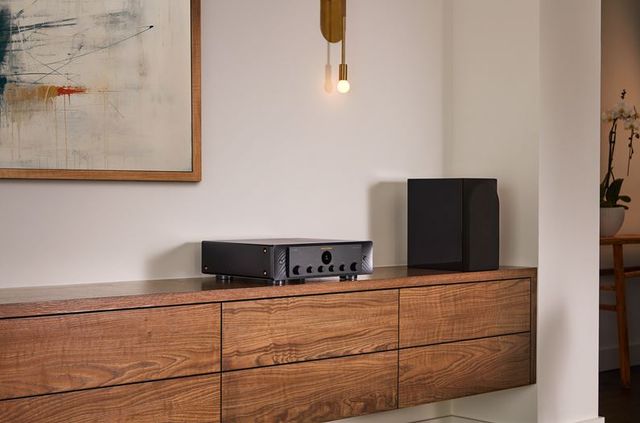
A preamp is the component that boosts low-level source signals to line level and manages source selection and volume before sending the signal to a power amplifier. Think of it as the traffic controller of your audio system.
You will see the name spelled three ways: preamp, pre amp and preamplifier. They all mean the same thing.
Core Functions of a Preamp
- Gain: Raises weak signals, such as those from a turntable, to a usable level.
- Input switching: Lets you choose between a streamer, CD player, turntable, TV or other source.
- Volume control: Sets how loud the music plays before the signal reaches the power amp.
- Tone or EQ controls: Some models offer bass, treble or balance adjustments.
- Signal routing: Sends audio to power amps, subwoofers, headphones or recording outputs.
Home Audio vs Microphone and Instrument Preamps
Musicians and recording engineers also use preamps to boost microphones and guitars. This guide focuses on home hi-fi and home theater preamps, the kind that sit at the heart of a listening room or media room.
Preamp vs Power Amp vs Integrated Amplifier
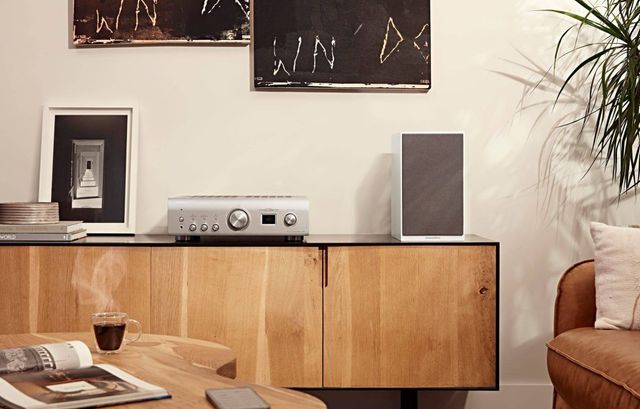
So many boxes have amp in the name that shopping gets confusing fast. Here is what each one does.
The Main Components
- Preamp: Selects the source, controls volume and prepares the signal.
- Power amplifier: Takes the line-level signal from the preamp and adds the muscle to drive your speakers.
- Integrated amplifier: Combines a preamp and power amp in one chassis.
- AV receiver: Combines a multichannel preamp, power amps, surround decoding and a radio tuner in one box.
- AV preamp processor: The home theater version of a preamp, with surround decoding and room correction but no built-in power amps.
The Simple Signal Chain
In a separates system, the music moves in a straight line:
- The source plays the music, such as a turntable, streamer or CD player.
- The preamp selects that source, adjusts the volume and outputs a line-level signal.
- The power amplifier boosts that signal enough to move the speaker drivers.
- The speakers turn the signal into sound.
Why Audiophiles Choose Separates
Splitting the preamp and power amp into two boxes keeps the delicate low-level circuits away from the big power supply and heat of the amplifier. That can lower noise and interference. It also lets you upgrade one piece at a time. You can add a more powerful amp for new speakers without replacing the preamp you love.
Do You Need a Preamp If You Already Have an Amplifier?
It depends on the type of amplifier. An integrated amp or receiver already has a preamp built in, so you do not need another. A standalone power amplifier has no volume control or input switching, so it needs a preamp in front of it.
Read More: Why You Need an AV Receiver | What is 2-Channel Audio?
Preamp Types and Audio Components Compared
Use this chart to compare the five main options for controlling and powering your system. Features vary by model.
| Feature | Stereo Preamp | Phono Preamp | AV Preamp Processor | Integrated Amp | AV Receiver |
|---|---|---|---|---|---|
| Main function | Source and volume control | Boosts and equalizes vinyl | Surround decoding and control | Preamp plus power amp | All-in-one theater hub |
| Best for | Two-channel listening room | Vinyl setup | Multichannel home theater | Simple hi-fi system | Everyday family theater |
| Typical inputs | Analog, often digital | Turntable only | HDMI, digital, analog | Analog, often digital | HDMI, digital, analog |
| Separate amp needed | Yes | Feeds a preamp or amp | Yes | No | No, but optional |
| Upgrade flexibility | High | High | High | Moderate | Lower |
| Price tier | Mid to luxury | Entry to luxury | Premium to luxury | Entry to luxury | Entry to premium |
Do You Need a Preamp?
The answer depends on what you already own and what you want to add. These are the most common setups where a dedicated preamp makes sense.
Setups That Benefit From a Preamp
- A turntable without a built-in phono stage: Your amp or preamp needs a phono input, or you need a separate phono preamp.
- A separates system: Any standalone power amplifier needs a preamp for volume and source control.
- Powered speakers with several sources: A preamp gives you one volume knob and easy switching between a turntable, streamer and TV.
- Adding a streamer or DAC: A preamp with digital inputs and a built-in DAC can become the hub for streaming and CDs.
- Upgrading a home theater: An AV preamp processor paired with separate power amps can step up from an AV receiver.
When You Do Not Need One
If you use an integrated amplifier or AV receiver that already has the inputs you need, you can skip a separate preamp. Many integrated amps also include a phono stage, so check the back panel for a phono input before you buy anything extra.
Does a Turntable Need a Phono Preamp?
Yes, every turntable needs a phono preamp somewhere in the chain. A cartridge puts out a tiny signal, far below line level. Records are also cut with reduced bass and boosted treble, and the phono stage applies RIAA equalization to reverse that curve. Without it, records sound quiet, thin and bright. Some turntables have a phono stage built in, and many amplifiers include one too.
Quick Self-Check
- Does your amplifier lack a volume knob or input selector?
- Is your turntable plugged into a regular line input and sounding quiet?
- Do you have more sources than your speakers or amp can accept?
- Are you planning to add a separate power amp later?
A yes to any of these means a preamp likely belongs in your system.
Types of Preamps: Tube, Solid-State, Phono, and AV Processors
Preamps come in several styles. Each one suits a different listener and system.
Tube vs Solid-State
- Tube preamps: Known for a warm, rich and spacious sound that many listeners love. They run warmer, and the tubes need replacing over time. McIntosh still builds vacuum tube preamplifiers such as the C22.
- Solid-state preamps: Known for clean, quiet and precise sound with very low distortion. They run cooler and need almost no maintenance. Rotel and McIntosh both offer solid-state stereo preamps.
- Hybrid designs: Some preamps let you choose. The Pro-Ject Pre Box RS2 Digital has an output stage you can switch between a tube and solid-state buffer.
Phono Preamps for MM and MC Cartridges
Phono preamps are built to match your cartridge. Moving magnet cartridges have a higher output and work with most phono inputs. Moving coil cartridges put out a much smaller signal, so they need more gain. Loading also matters, because the right load setting helps a cartridge sound balanced instead of dull or harsh. Pro-Ject and McIntosh both make dedicated phono preamps.
Preamps With DACs and Streaming
Many modern stereo preamps include a built-in DAC that turns digital music from a streamer, computer, TV or CD transport into analog sound. Some also include streaming or a headphone amplifier. That makes one box the hub for both digital and analog sources.
AV Preamp Processors
An AV preamp processor runs a home theater. It decodes surround formats such as Dolby Atmos, handles HDMI video switching and offers room correction to tune sound to your space. Marantz AV processors and McIntosh A/V processors pair with separate multichannel power amps for a high-performance theater.
Read More: How to Start Listening to Vinyl Records | Boost Music Quality with DACs and NAS Drives
Preamp Pros and Cons: Is a Separate Preamp Worth It?
A dedicated preamp in a separates system can sound cleaner and gives you room to grow. An all-in-one integrated amp or receiver is simpler and takes up less space. Here is how the trade-offs compare.
Pros
Cleaner, quieter sound
Separating low-level circuits from the power amp can reduce noise and interference.
Upgrade flexibility
You can change the power amp, phono stage or speakers without replacing everything.
More connection options
Dedicated preamps often add balanced XLR outputs, more inputs and a headphone amp.
Better system matching
You can pick the exact preamp and amp that suit your speakers and room.
Cons
Higher total cost
Two boxes and extra cables usually cost more than one integrated amp.
More space and setup
Separates need more shelf room, more power outlets and careful wiring.
Does a Preamp Improve Sound Quality?
A quality preamp can improve sound quality, but it is not magic. A good one lowers noise and preserves dynamics and fine detail. A poor one can add hiss, hum or a dull sound that no amp can fix.
Specs That Matter
- Signal-to-noise ratio: A higher number means a quieter background between notes.
- Total harmonic distortion: A lower number means the preamp adds less of its own sound.
- Gain: Enough gain drives your power amp fully without pushing the volume knob to its limit.
- Input and output impedance: A low preamp output impedance paired with a high amp input impedance gives the cleanest handoff.
- Frequency response: A wide, flat response passes the deepest bass and highest treble without coloring the sound.
Balanced XLR vs Unbalanced RCA
RCA cables are the common, unbalanced connection found on most home gear. Balanced XLR cables use three pins and help cancel noise picked up along the cable. Balanced outputs matter most when the preamp and power amp are far apart, such as with monoblock amps near the speakers, or in rooms with lots of electrical gear.
System Matching Beats Any One Spec
Two great specs on paper do not always add up to great sound. Gain staging, the way gain is shared between the preamp and power amp, often matters more. Too much gain makes the volume jump fast and can raise the noise floor. Too little leaves the system sounding flat. The best results come from matching the preamp to your amp, speakers and sources as a set.
How to Connect and Set Up a Preamp
A clean setup keeps your system quiet and protects your speakers. Follow these steps for a typical two-channel system:
- Turn everything off: Make all connections with every component powered down.
- Connect your sources: Run your streamer, CD player and other line-level sources to the preamp inputs.
- Add the turntable: Connect the turntable to a phono preamp or phono input, then attach the ground wire to the grounding post to prevent hum.
- Connect the power amp: Run RCA or balanced XLR cables from the preamp outputs to the power amp inputs.
- Set home theater bypass if needed: Connect the AV processor front outputs to a bypass input on the stereo preamp so both systems share the same front speakers and amp.
- Power on in order: Turn on sources, then the preamp, then the power amp last. Reverse the order when you shut down.
- Start low: Set the volume near zero before you play music, then raise it slowly.
Complex hi-fi and theater systems, with multiple amps, zones and rooms, benefit from professional design. Our installation team at Flanner's plans the wiring, rack layout and calibration so everything works together from day one. One trick our technicians use when a system hums is to unplug every source except one, then add them back one at a time. If the hum returns with a single source, the problem is a ground loop from that device, not the preamp.
Read More: 7 Home Theater Setup Mistakes That Ruin Sound Quality | Best High-End Speaker Brands Ranked by Experts
Build Your Preamp Shopping List Around Your Sources
Most buyers start by comparing brands and prices. A faster path is to list every source you own or plan to own, then match each one to the connection it needs. That list tells you exactly which preamp features are must-haves and which you can skip.
- Turntable with a moving magnet cartridge: Look for a built-in MM phono stage or plan for a separate phono preamp.
- Turntable with a moving coil cartridge: Make sure the phono stage offers high gain and adjustable loading.
- Streamer or computer: Choose a preamp with a built-in DAC and USB or coaxial digital inputs.
- TV: Look for an optical input or an HDMI input so the TV can play through your stereo.
- Headphones: A dedicated headphone output saves you from buying a separate headphone amp.
- Home theater: A home theater bypass input lets a surround system share your stereo speakers.
- Long cable runs to the amp: Balanced XLR outputs keep the signal quiet over distance.
Shop Preamp Options at Flanner's
These picks cover a high-end digital preamp in two finishes and a simple upgrade for receivers and integrated amps with pre-out and main-in connections. Each one helps your system sound cleaner and more controlled. Our audio team at Flanner's can help you match them to your amp, speakers and sources.
Pro-Ject Black High End Preamplifier
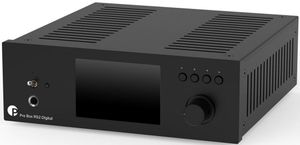
The Pro-Ject Pre Box RS2 Digital in black is a DAC and preamp built for serious listening. It uses dual ESS9038Q2M converters in a fully balanced, dual-mono design, so the left and right channels each get their own signal path. Through USB, it plays PCM files up to 32-bit/768 kHz and DSD up to DSD512.
Its output stage switches between a 6922 tube and solid-state buffer, letting you choose warm or precise sound. Eight digital filters let you fine-tune the sound even further, and the black aluminum case blends into any rack.
Top Features
- Dual-Mono DAC Design: Two ESS9038Q2M chips with separate paths for each channel.
- Tube or Solid-State Output: Switch between a 6922 tube and solid-state buffer.
- High-Resolution Playback: Supports PCM up to 32-bit/768 kHz and DSD512 via USB.
- Balanced and Unbalanced Outputs: XLR and RCA pre-outs for any power amp.
- Eight Digital Filters: Shape the sound to your taste, including a filter from the MQA creators.
Pro-Ject Silver High End Preamplifier
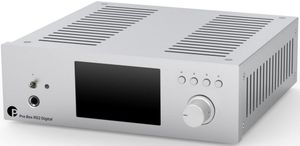
The silver Pro-Ject Pre Box RS2 Digital brings the same high-end performance in a bright aluminum case that pairs nicely with silver amps and turntables. It accepts digital sources through I²S over HDMI, AES/EBU, optical and coaxial inputs, plus an RCA analog input for an external phono stage or CD player.
A fully DC-coupled headphone amplifier drives almost any pair of headphones without coupling capacitors in the signal path. A large front display, fast menus and a full aluminum remote make it easy to control every setting from your favorite listening chair.
Top Features
- Wide Digital Connectivity: I²S over HDMI, AES/EBU, optical, coaxial and USB inputs.
- DC-Coupled Headphone Amp: Clean, powerful drive for a wide range of headphones.
- MQA Support: Full hardware and software support for MQA playback.
- Advanced Re-Clocking: XMOS processing with dedicated re-clocking for clean timing.
- Aluminum Remote and Display: Easy control and clear information at a glance.
AudioQuest® PreAmp Jumpers
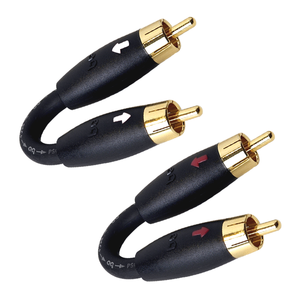
Many stereo receivers and integrated amplifiers have pre-out and main-in jacks that let you split the preamp and power amp sections. When those sections stay connected, most units use simple metal pins to bridge the gap.
AudioQuest PreAmp Jumpers replace those basic stock links with RCA jumpers designed to reduce distortion across the connection. The result is cleaner, clearer sound from the receiver or amp you already own. It is an easy, affordable upgrade that plugs right in, and it is backed by a 5-year warranty.
Top Features
- Pre-Out to Main-In Bridge: Replaces the stock pins on receivers and integrated amps.
- Distortion Reduction: Designed to lower distortion across the preamp-to-amp connection.
- RCA Connection: Plugs into standard RCA pre-out and main-in jacks.
- 5-Year Warranty: Parts and labor coverage from AudioQuest.
The Right Preamp Brings Your Music to Life
A preamp raises weak signals, switches sources and controls volume before your power amp takes over. You need one with a standalone power amp, many powered speaker setups and any turntable without a phono stage, and the right type depends on your sources, your amp and how you listen.
When you are ready to hear the difference, visit Flanner's in West Allis or Grafton. Our audio experts can demo preamps in our listening rooms, design a system around your music, and handle professional installation. You get local service from a Milwaukee-area team that lives and breathes high-end audio, not a big-box checkout line.
Frequently Asked Questions about Preamps
A preamp in a home audio system boosts source signals to line level, switches between sources and controls volume. It then sends a clean signal to the power amplifier, which drives the speakers.
You need a preamp if your amplifier is a standalone power amp with no volume control or input switching. Integrated amplifiers and receivers already include a preamp stage, so they do not need another one.
A preamp only controls and prepares the signal, while an integrated amplifier combines a preamp and power amp in one box. Separates give you more upgrade flexibility, while an integrated amp saves space and money.
A quality preamp can improve sound quality by lowering noise and preserving detail and dynamics. The biggest gains come when the preamp is well matched to your power amp, speakers and sources.
You need a phono preamp for your turntable unless the turntable or your amplifier already has one built in. The phono stage adds the extra gain and RIAA equalization that records require.
A tube preamp is not better than a solid-state preamp, just different in character. Tubes offer a warm, spacious sound, while solid-state designs deliver clean, precise sound with less maintenance.
Why Trust Flanner's Home Entertainment?
When you choose Flanner’s Home Entertainment, you're trusting a deeply rooted, family-owned legacy that dates back to 1891 a company that has evolved from a piano and sheet-music shop into a premier specialty retailer of high-end audio, video, and smart-home systems. With showrooms in West Allis and Northshore Grafton, Flanner’s combines decades of expertise and personalized service. Its team includes members with 15–30 years of industry experience to design and install tailored home theater, multi-room audio, networking, and control solutions. Over its more than 130-year history, the business has maintained its commitment to craftsmanship, reliability, and genuine customer relationships, making every system feel as thoughtfully built as the business itself.
METADESCRIPTION: Get clear answers to common preamp questions: what a preamp does, preamp vs amp, phono and tube options, sound quality, and setup tips from Flanner's.
MAGENTO IDENTIFIER/SLUG: /preamp-faqs