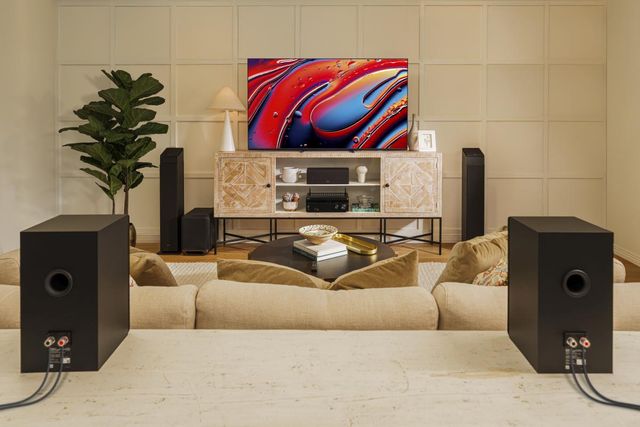
The reviews all said the same thing, so the pair got ordered, unboxed, and wedged into the built-ins on either side of the television that same night. Then the first song played. The bass thumped and smeared into one blurry note, the singer sat somewhere behind the TV instead of floating between the speakers, and by movie night the dialogue had disappeared under the score. Nothing about it matched the reviews. In that story the speakers are almost never the problem. Bookshelf speakers are unusually sensitive to where they sit and what drives them, and three inches of trapped air behind a cabinet door will flatten a genuinely great pair.
Hear Bookshelf Speakers Side by Side Before You Buy
Our listening rooms let you compare pairs on the same amplifier, at the same volume, in the same room. Shop speakers, amplifiers, stands, and subwoofers with expert setup and local service included.
Nearly all of that is fixable in an afternoon, and most of the fixes cost nothing. At Flanner’s Home Entertainment & Appliance, we set these speakers up in our Milwaukee area listening rooms, match them to the right amplification, and install them in real Wisconsin homes every week. This guide covers how bookshelf speakers work, powered versus passive systems, the specs that actually change what you hear, room-by-room sizing, placement that fixes muddy bass, when a subwoofer earns its spot, and the specific models our team keeps recommending.
Key Takeaways
- Size class, not a mounting instruction: A bookshelf speaker is a compact two-way standmount design meant to sit at ear level, and most models sound noticeably better on stands than crammed into an actual shelf.
- Powered or passive decides your whole system: Powered pairs include amplification and often HDMI ARC, Bluetooth, and a subwoofer output, while passive pairs need a receiver or integrated amp and reward you with upgrade room.
- Placement outranks price: Tweeters at seated ear level, six to eight feet apart, several inches off the rear wall, and slightly toed in will change the sound more than spending another few hundred dollars.
- Many pairs are sold one at a time: Plenty of high-end models are priced each, so building a stereo pair means ordering two, and a home theater front stage means adding a matching center channel.
Big Sound From a Small Footprint: Bookshelf Speakers Explained
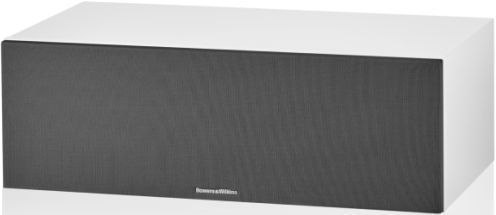
Bookshelf speakers are compact two-way standmount speakers designed to sit at ear level on a stand, shelf, credenza, or desk instead of on the floor. They deliver full-range stereo sound from a cabinet small enough to live in a room that has no space for towers.
The standard recipe is simple. A tweeter of roughly one inch handles treble, a woofer of about four to seven inches handles midrange and bass, and a crossover network inside the cabinet splits the incoming signal so each driver only reproduces the frequencies it is built for. That crossover point is why a well-designed pair sounds like one coherent source rather than two separate parts.
Cabinets, Ports, and Why the Back Panel Matters
The cabinet is not just a box. It controls how the woofer loads, how much cabinet resonance colors the sound, and how deep the bass goes. Three approaches dominate:
- Rear-ported designs vent air out the back, which extends bass output but needs breathing room behind the speaker to work correctly.
- Front-ported designs vent forward, which makes them far more forgiving in tight cabinets, media walls, and shallow shelves.
- Sealed designs have no port at all, trading some low-end output for tighter, more controlled bass that behaves well near walls.
Port location is the single most overlooked spec on the box. Push a rear-ported speaker two inches from drywall and the port output reflects straight back into the woofer, which is exactly how you get that one-note boom described at the top of this article.
The Naming Confusion Nobody Explains
The term describes a size class, not an endorsement of shelf mounting. Speaker engineers voice these cabinets assuming free air around them, and a shelf surrounded by wood on five sides is the opposite of that. The name stuck decades ago and never went away.
Set your expectations honestly against the alternatives. Compared with floor standing speakers, a compact pair gives up deep bass output and maximum volume in a large room. In return you usually get sharper imaging, easier placement, and a much smaller visual footprint. Compared with a soundbar, you get real stereo separation and a genuine upgrade path instead of a sealed appliance.
Read more:
- Powered Bookshelf Speakers for Music Lovers & Home Studios
- 5 Reasons Customers Choose McIntosh Speakers
Powered vs Passive Bookshelf Speakers: Which Setup Fits You
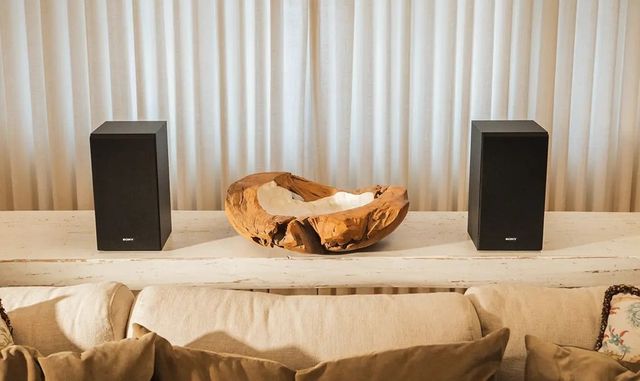
Every pair on the market falls into one of two camps, and picking the wrong one is the most expensive mistake in this category.
Passive models contain no amplification. They need an external amplifier or AV receiver, connected with speaker wire to binding posts on the back. Powered and active models build the amplifiers into the cabinets, so they often need nothing more than a source and a wall outlet.
What Powered Models Bring
Powered bookshelf speakers have quietly turned into complete systems. Depending on the model, you get:
- Bluetooth and Wi-Fi streaming for phones, laptops, and network services
- HDMI ARC so the TV remote controls volume and the speakers handle television audio
- Optical and USB inputs for game consoles, streaming boxes, and computers
- A built-in phono stage on some models, which lets a turntable connect directly
- A subwoofer output for adding low end later
- A remote control, so the pair behaves like an appliance instead of a project
That HDMI ARC feature deserves more attention than best-of lists give it. A powered pair with an ARC input can replace a soundbar outright, giving you real left and right separation from two cabinets instead of simulated width from one bar under the screen. For a bedroom or a smaller living room, that is often the better-sounding and better-looking answer.
What Passive Models Bring
Passive pairs hand you control. You choose the amplifier, and you can change it in five years without replacing the speakers. You can fold the pair into a full surround system, run them as fronts today and demote them to surrounds later, and build around separates that each get upgraded on their own schedule.
The reader test is straightforward. If a bedroom or home office needs one tidy pair to be the entire system, powered wins. If the living room is built around a receiver, multichannel movies, and future expansion, passive wins.
Bookshelf Speaker Specs That Actually Matter
Spec sheets are full of numbers that do not change what you hear. These five do.
Sensitivity is measured in decibels at one watt at one meter. A speaker rated 88 dB plays louder on the same watt than one rated 84 dB. Lower sensitivity is not a flaw, but it does mean the pair needs more amplifier power to reach the same volume in the same room.
Nominal impedance is the electrical load the speaker presents, listed in ohms. Ratings of 4, 6, and 8 ohms are all common. Some receivers need an impedance setting changed in the menu, and a 4 ohm load asks for an amplifier that stays stable when the going gets hard. Check the receiver manual before assuming any speaker will work with it.
Recommended amplifier power is a range, not a target. Continuous power is what the amp delivers all day, while peak numbers describe short bursts. Here is the counterintuitive part: underpowering kills tweeters far more often than overpowering does. A small amp pushed into clipping sends a distorted, flattened waveform straight to the tweeter, and that is what burns voice coils. Clean headroom is protection, not risk.
Frequency response tells you the practical low-end limit. Many compact pairs run out of authority somewhere around 50 to 60 hertz, which is the honest reason a subwoofer belongs in the conversation for movies and bass-heavy music.
Woofer diameter is the most useful real-world variable of all. Roughly four to five inch woofers suit desks and bedrooms, where the listener sits close and control matters more than output. Five and a quarter to six and a half inch woofers suit living rooms that need to fill more air. Bigger is not automatically better, because a large woofer two feet from your face can overwhelm a near-field setup.
One detail worth handling correctly on install day: bare speaker wire strands that fray across the binding posts can short an amplifier output and drop it into protection mode, and most amplifier warranties specifically exclude damage caused by a shorted output. Twisting the strands tightly and terminating them with banana plugs or ferrules takes ten extra minutes and removes the risk entirely. While you are at it, 16 gauge wire covers typical runs, and 14 gauge is the safer choice past about 50 feet.
Bookshelf Speakers by Room: Living Room, Office, and Bedroom Compared
Room size, seating distance, and how you actually use the system should drive the decision far more than brand loyalty. Use this as a starting map.
| Room and Use Case | Ideal Woofer Size | Recommended Room Size | Powered or Passive | Typical Listening Distance | Subwoofer Needed | Placement Method | What to Prioritize |
|---|---|---|---|---|---|---|---|
| Large Living Room Stereo Listening | 6 to 6.5 inches | 300 to 450 square feet | Passive | 9 to 12 feet | Optional | Filled stands, off wall | Output and low-end weight |
| Living Room Home Theater Duty | 5 to 6.5 inches | 250 to 400 square feet | Passive | 8 to 12 feet | Yes | Stands or wall brackets | Timbre match across channels |
| Home Office Desktop Near-Field | 4 to 5 inches | 90 to 150 square feet | Powered | 2 to 4 feet | Optional | Angled pads on desk | Near-field clarity and inputs |
| Bedroom Casual Late-Night Listening | 4 to 5.25 inches | 120 to 200 square feet | Powered | 6 to 9 feet | No | Dresser or short stands | Balance at low volume |
| Small Apartment or Condo | 4 to 5.25 inches | 150 to 250 square feet | Either | 6 to 9 feet | Optional | Front-ported near walls | Bass control, neighbor peace |
| Turntable and Vinyl Setup | 5 to 6.5 inches | 200 to 350 square feet | Either | 7 to 10 feet | Optional | Stands away from turntable | Phono stage and isolation |
Read the table across, not down. The most common mismatch we see is a buyer choosing speakers sized for a great room and then using them two feet away on a desk, where a six and a half inch woofer never gets room to breathe and every recording sounds thick. The opposite mistake is just as costly: a four inch woofer asked to fill a 400 square foot open-concept space will sound thin no matter how good the amplifier is.
Fix Muddy Sound With Smarter Bookshelf Speaker Placement
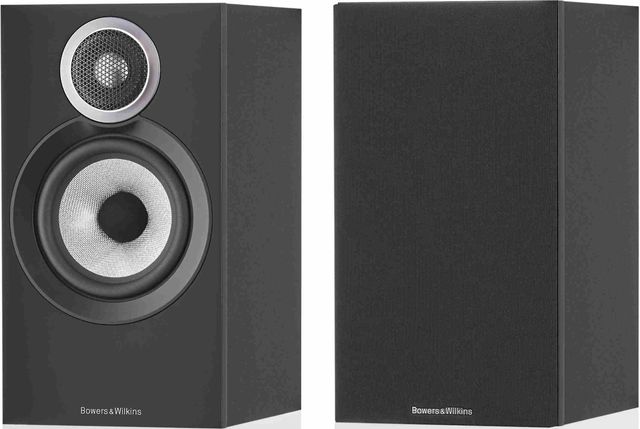
Placement is free, and it beats a hardware upgrade almost every time. Start with height. The tweeter should land at ear level for a seated listener, which for most sofas puts it somewhere between 36 and 42 inches off the floor. That single change fixes more dull, disconnected systems than any cable ever has.
Next, build a triangle. Set the speakers about as far apart as each one sits from your listening position, which in a typical living room means six to eight feet apart with the seat six to eight feet back. Angle each cabinet slightly toward the seat so the axes cross just behind your head. That toe-in tightens the center image and pulls vocals forward.
Stands Versus an Actual Shelf
Bookshelf speaker stands do two things a shelf cannot. They put the tweeter at the right height, and their mass decouples the cabinet from the furniture so vibration turns into sound instead of buzzing woodwork. Fill hollow stands with sand or shot and the improvement in bass definition is immediately audible.
A real shelf works against you in two ways. Boundary reinforcement from the surrounding surfaces adds bass energy that was never in the recording, and early reflections off the shelf floor and side panels arrive at your ears just behind the direct sound, smearing detail. That is the muddiness people blame on the speakers.
Clearances and Fixes You Can Act On
- Give rear-ported models several inches to a foot of clear air behind the cabinet, and give front-ported models at least a couple of inches.
- Keep both speakers the same distance from their nearest side wall, since asymmetry pulls the stereo image sideways.
- Set isolation pads under any speaker sitting directly on wood, glass, or a desktop.
- Use foam port plugs when a rear-ported speaker truly has to live in a cabinet, and accept slightly less bass in exchange for much cleaner bass.
- Take cabinet doors out of the equation entirely, because glass and wood in front of a tweeter dull the top end.
- Run receiver room correction or dial back the bass tone control to tame boundary gain after everything is placed.
Desktop setups have their own rules. Small desk stands or angled foam wedges tilt the tweeter up toward your ears instead of your chest, and moving the pair outside the edges of the monitor gives you real stereo width instead of a narrow blob behind the screen.
Bookshelf Speakers Pros and Cons Every Buyer Should Weigh
This class exists because it solves a real problem: most rooms cannot host a pair of towers, and most listeners do not want them. What you get in exchange is imaging and detail that punches well above the price, in a cabinet that fits real furniture. What you give up is deep bass, and the honest accounting includes the stands, amplifier, and subwoofer that a complete system may need.
Pros
Room-friendly footprint
A compact cabinet fits a credenza, a desk, or a pair of slim stands in rooms where floor standing speakers would dominate the space.
Imaging and soundstage per dollar
Smaller cabinets diffract less and disappear more completely, so a good pair produces a sharper, more believable center image than similarly priced towers.
One pair, many jobs
The same speakers can serve as a stereo system today, front left and right in a home theater next year, and surrounds after that.
Real upgrade paths
Add a subwoofer, add a matching center channel, or swap the amplifier without starting over, which is not possible with a sealed soundbar.
Decor flexibility
Finish options in black, white, and wood veneers let the pair read as equipment or as furniture depending on the room.
Cons
Limited deep bass extension
Physics caps how low a small woofer in a small cabinet can go, so a subwoofer plus its cable and power outlet becomes part of the plan for movies.
The hidden costs are real
A passive pair needs an amplifier or receiver and a set of proper stands, and those two line items can rival the price of the speakers themselves.
Read more:
Do Bookshelf Speakers Need a Subwoofer for Music and Movies
For most music at moderate volume in a normal-sized room, a good pair is genuinely satisfying on its own. For movies, electronic and hip-hop production, and any room above roughly 300 square feet, a subwoofer makes an obvious and immediate difference.
Setup is less complicated than it sounds. Set the speakers to small in the receiver menu, choose a crossover point around 80 hertz, and let the subwoofer handle everything below that. The receiver stops asking the small woofers to reproduce frequencies they cannot manage, and the sub takes over where it is strongest.
Placing and Integrating the Sub
Placement matters as much for a subwoofer as it does for the mains, and there is a free method for finding the right spot. Put the sub in your listening seat, play music with steady bass, then crawl the perimeter of the room on hands and knees. Wherever the bass sounds most even is where the sub belongs. Set level by ear against the speakers so the low end supports rather than announces itself, and flip the phase switch to whichever position sounds fuller at the seat.
One well-placed subwoofer beats two badly placed ones every time. Two only pays off once both are positioned deliberately to smooth out room modes.
Connection has two paths. On a receiver or integrated amp, run a single cable from the subwoofer preamp output to the sub. On a powered pair, use the subwoofer output built into the speakers themselves. Either way it is one cable, plus power for the sub.
Here is the benefit competitors skip. A subwoofer does not just add low end, it removes work. Once the crossover hands off bass duty, the small woofers stop trying to move air they were never designed to move, so the pair plays cleaner, louder, and with less strain at every volume level above conversation.
Using Bookshelf Speakers in Stereo and Home Theater Systems
Two-channel is the simplest and most rewarding starting point. Pair a passive set with an integrated amplifier, a stereo receiver, or a compact streaming amplifier, and you have a system with a single volume knob and no menus. Adding a turntable takes either a receiver with a phono input or a small external phono preamp between the table and the amp, since a cartridge output is far too quiet to feed a line input directly.
Growing Into a Home Theater Front Stage
The same pair can anchor a compact 5.1 layout as the front left and right channels, or serve as surround and rear channels in a larger system. The piece most people underestimate is the center channel. It carries the large majority of movie dialogue, and it sits between two speakers whose tonal character your ears already know.
That is why timbre matching matters more than raw specs when you mix speakers. If the center uses different drivers and a different crossover philosophy than the mains, a voice panning from left to center to right audibly changes color as it crosses the screen. Matching brand and series across the front three channels keeps that pan invisible, and it does more for movie sound than upgrading any single speaker in isolation.
Dolby Atmos adds height information above the listener. Compact speakers can serve as surround channels in an Atmos layout, while the overhead effects channels are usually best handled by in-ceiling speakers or upward-firing modules, which is a custom installation conversation more than a shopping one.
Finish with calibration. The automatic room correction built into modern receivers uses a microphone at the seat to set channel levels, speaker distances, and crossover points, and running it takes about fifteen minutes. Professional calibration goes further by verifying those results, correcting bass response at the seating positions, and squeezing real performance out of gear you already own.
Hear the Difference in Person and Buy With Confidence
Two speakers can measure almost identically and sound nothing alike. Cabinet voicing, tweeter character, crossover design, and how a speaker behaves off-axis all show up in listening long before they show up on a spec sheet. That is why a serious audition is worth an hour of your Saturday.
Use a repeatable method so the comparison actually means something:
- 1. Bring three or four tracks you know intimately, including one with a solo voice and one with acoustic bass or kick drum.
- 2. Listen at a realistic volume, close to how loud you actually play music at home.
- 3. Compare only two pairs at a time, since the third pair erases your memory of the first.
- 4. Level-match by ear before judging, because the louder speaker always sounds better for the first thirty seconds.
- 5. Listen for vocal clarity, cymbal texture, and whether bass notes stop cleanly, not for raw loudness.
Ask the dealer real questions too: which amplifier suits this pair’s impedance and sensitivity, whether your room size calls for a subwoofer, what stand height puts the tweeter at your seated ear level, and what the return and upgrade policy looks like if the room disagrees with the choice.
This is where a local specialist separates itself from a big-box aisle or an online cart. At Flanner’s, our Milwaukee area listening rooms let you compare pairs side by side on the same amplification, our team matches amps to speakers instead of guessing, and our custom installation crew handles mounting, wiring, and calibration in your home. When something needs attention three years from now, service is local and the people who sold it to you are still here.
The Breathing Room Number That Decides Which Pair You Can Actually Use
Before you shop, measure one number and write it down: the usable depth of the spot where the speakers will live, minus the depth of the cabinet you are considering, which leaves your rear clearance. That single figure quietly eliminates or approves entire categories of speaker before price or brand ever enters the conversation, and almost nobody calculates it. A 12 inch deep media shelf holding a 10 inch deep rear-ported speaker leaves two inches of clearance, and no amount of receiver tuning makes that combination sound like it did in the showroom. Do the subtraction first, then shop the models that fit the answer.
- Under 3 inches of clearance: choose sealed or front-ported models only, and treat rear-ported designs as off the table.
- 3 to 6 inches: front-ported models work well, and rear-ported models are usable with a foam port plug and a bass trim on the receiver.
- 7 to 12 inches: most rear-ported speakers are happy here, and this is the sweet spot for a credenza or a shallow console.
- 16 inches or more, or open stands: everything is on the table, and you can tune bass weight by moving the speakers closer to or farther from the wall.
- Add the side wall check: measure both speakers to their nearest side wall and get the two numbers within a few inches of each other.
- If the number is fixed and small, spend the savings on a subwoofer placed where it can breathe rather than on a bigger speaker that cannot.
Read more:
- Surround Sound 101: What You Need to Know
- 5 Mistakes to Avoid When Buying a Speaker Home Theater System
Top-Rated Bookshelf Speakers Worth Hearing Right Now
The four listings below cover an accessible starting point, a step-up performance choice in two finishes, and the matching center channel that turns a stereo pair into a home theater front stage. Read the quantity carefully before checkout, because the three Bowers & Wilkins listings here are priced and sold each, meaning one speaker per order rather than a pair. Every model below can be heard in our Milwaukee area listening rooms before you commit.
Sony CS Speaker 5.1” Black Bookshelf Speaker

This is the accessible entry point for a first real stereo system, a home office, or a bedroom that needs honest sound without a rack of gear. The 5.1 inch woofer sits right in the range the room table above recommends for desks, dressers, and short stands, close enough to the listener that control matters more than output. The black finish stays visually quiet against most furniture. It is a passive design, so budget for a stereo receiver or a compact integrated amplifier alongside it, and confirm the listed quantity before checkout.
Top Features
- Compact 5.1 inch woofer: Sized for near-field desks, bedrooms, and small rooms where a larger driver would overwhelm the space.
- Black cabinet finish: Reads as equipment rather than furniture, so it disappears against dark shelving and media consoles.
- Passive design: Connects to any stereo receiver or integrated amplifier, which keeps the upgrade path open as your system grows.
- First-system friendly: A sensible starting pair for an office desktop or a bedroom setup that may later move into surround duty.
Bowers & Wilkins 600 Series 5” Black Bookshelf Speaker (Each)

Step up here when the living room is the primary listening room and the amplifier deserves something better to drive. The 600 Series has been the reference point for serious performance at this cabinet size for years, and the 5 inch woofer suits the 250 to 400 square foot rooms described earlier when the pair sits on filled stands. Black finish keeps it looking like precision equipment. Important detail: this listing is priced and sold each, so an actual stereo pair means adding two of them to your cart.
Top Features
- 600 Series performance: A step-up passive design aimed at living rooms where imaging and detail are the point.
- 5 inch woofer: Matched to mid-sized rooms and seating distances in the eight to twelve foot range.
- Black finish: Blends into dark media walls, black stands, and equipment racks without drawing the eye.
- Sold individually: Priced per speaker, so order two for stereo and keep the option of adding channels later.
- Front stage ready: Serves as front left and right in a home theater alongside the matching center channel below.
Bowers & Wilkins 600 Series 5” Oak Bookshelf Speaker (Each)

Same speaker, different finish. This is the identical 600 Series model listed above in oak rather than black, and the performance is the same in every respect, so the decision here is purely visual. Oak belongs in rooms where the speakers should read as furniture, next to hardwood floors, warm trim, mid-century pieces, or the light wood tones common in Wisconsin homes. Choose it when a black box on a stand would fight the room instead of joining it. Like the black version, this listing is sold each, so order two for stereo.
Top Features
- Oak finish: A warm wood tone that sits naturally beside hardwood floors, light trim, and wood furniture.
- Identical performance: Same 600 Series design and same 5 inch woofer as the black version, so the choice is styling only.
- Furniture-friendly styling: Suits open living rooms where the system should look intentional rather than technical.
- Sold individually: Priced per speaker, which means two for a stereo pair and a third channel added only if you want it.
Bowers & Wilkins 600 Series 5” White Center Channel Speaker (Each)

This one is a center channel, not a bookshelf speaker, and it is the piece that turns a stereo pair into a home theater front stage. It belongs under or above the screen, handling the dialogue that carries the movie. Because it comes from the same 600 Series family as the pair above, the tonal character matches, so voices panning across the screen never change color mid-sentence. The white finish suits light walls and white media cabinetry. It is sold individually, which is normal, since a system needs exactly one.
Top Features
- Center channel duty: Reproduces the majority of movie dialogue, which is the hardest job in any home theater system.
- 600 Series timbre match: Shares a family voicing with the 600 Series pair, keeping tone consistent across the front three channels.
- White finish: Made for light walls, white cabinetry, and rooms where black equipment would stand out.
- Sold each: Priced individually, and one is all a front stage requires alongside your left and right speakers.
- Clear expansion path: The logical next purchase after a stereo pair when movies start mattering as much as music.
Hear Your Next Pair of Bookshelf Speakers at Flanner’s Today
Match the woofer size to your room and seating distance, choose powered or passive based on the gear you actually want to own, and treat placement and subwoofer pairing as part of the purchase rather than an afterthought. Get those three right and a modest pair will outperform an expensive one that was bought blind and shoved into a cabinet.
Shop bookshelf speakers at Flanner’s Home Entertainment & Appliance online, or come hear them in person. Our listening rooms let you compare pairs side by side on matched amplification instead of guessing from a spec sheet, our team pairs amplifiers and receivers to the speakers you choose, and our custom installation crew handles mounting, wiring, subwoofer integration, and professional calibration in your own room. Local Milwaukee area service and support after the sale is the part a warehouse or an online cart cannot ship you.
Give us a call or stop in, and we will help you plan the whole system before anything gets ordered.
Frequently Asked Questions About Bookshelf Speakers
Passive bookshelf speakers need an external amplifier or AV receiver, while powered and active models have amplification built in and need only a source and a power outlet. Check the product listing for the word powered or active, because that single word determines whether an amplifier belongs in your budget.
Yes, for most music at moderate volume in a normal-sized room a good pair is satisfying on its own. Movies, bass-heavy genres, and rooms above roughly 300 square feet benefit clearly from a subwoofer, which also lets the small woofers play cleaner and louder.
Place them roughly as far apart as each speaker sits from your listening position, which in most living rooms means six to eight feet apart. Angle each cabinet slightly toward the seat so the two axes cross just behind your head, which tightens the center image.
It is not ideal, because surrounding surfaces add boomy boundary bass and early reflections that blur detail. If a shelf is the only option, pick a front-ported or sealed model, add isolation pads, keep the tweeter near ear level, and use tone controls or room correction to tame the extra bass.
Bookshelf speakers are usually the better choice in a small room, since a tower needs distance to integrate its drivers and will overload a small space with bass. A compact pair on stands plus a subwoofer delivers deeper and more even low end in that space than a tower crammed against a wall.
Use four to five inch woofers for desks, offices, and bedrooms, five and a quarter to six and a half inch woofers for living rooms in the 250 to 450 square foot range. Match the driver size to your seating distance too, since a large woofer two feet from your ears never gets room to blend.
Why Trust Flanners Home Entertainment?
When you choose Flanner’s Home Entertainment, you're trusting a deeply rooted, family-owned legacy that dates back to 1891 a company that has evolved from a piano and sheet-music shop into a premier specialty retailer of high-end audio, video, and smart-home systems. With showrooms in West Allis and Northshore Grafton, Flanner’s combines decades of expertise and personalized service. Its team includes members with 15–30 years of industry experience to design and install tailored home theater, multi-room audio, networking, and control solutions. Over its more than 130-year history, the business has maintained its commitment to craftsmanship, reliability, and genuine customer relationships, making every system feel as thoughtfully built as the business itself.